THE VALUE OF ART IN THE CHILD’S DEVELOPMENT
Innocent Mokoena
21 April 2022
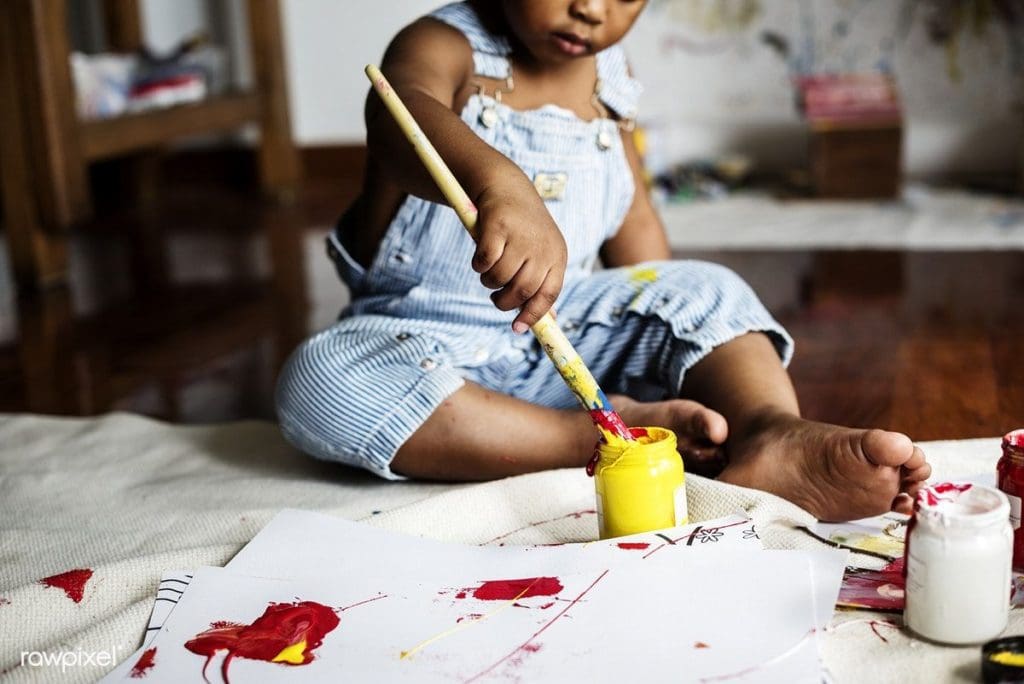

Have you ever seen a child using both hands to smooth cool finger paint across a sheet of paper, pushing her fingertips through the paint to create squiggles? Or maybe you have seen a child using crayons to create a plethora of spirals? If you answered yes, you have seen the concentration on these children’s faces, as well as the happy artistic expressions they have explored.
Most of us intuitively understand the value of art for our children; we believe it is necessary simply because we have witnessed our children get intensely immersed in art. But, beyond our feelings and beliefs, there is a wealth of empirical knowledge regarding the value of art in our children’s development that is both fascinating and useful to know. Creating art broadens a child’s ability to interact with the world around them and teaches them new self-expression and communication abilities. Not only can art aid in the development of the right side of the brain, but it also cultivates vital abilities that are beneficial to a child’s growth. But art can become a vital way of unrestrained self-expression and amazement for a child, well beyond the physical data assessed by research. Art is important in the same way that language is important or that breathing is important! It is a crucial aspect of what differentiates us as human beings.
Children do Develop Life Abilities through Fine Art Activities.
While art may seem like a fun and easy-going activity, let’s face it, art is so much more than that! In fact, your children are learning a lot through art and doing artsy activities. Enabling your kids to get creative in the art studio will help them build useful life skills, so enroll your kids today, and you will find that they are quickly developing these skills:
Communication Abilities: When a child sketches, paints, or hangs buttons from a swaying mobile, he or she is starting to communicate visually. A child may draw to record an actual event, such as playing in the park, to express delight via swirling colors, or to communicate an emotionally charged experience, such as the loss of a loved one, through art. Art communicates sentiments that cannot be stated verbally.
Problem-Solving Qualities: When children play with art ideas, they are experimenting with different possibilities and overcoming challenges in the exact same way that a scientist experiments and solves problems. Questions like these arise in their brain: Should I balance my mobile with a shorter length of yarn? What should I try instead of this tape because it isn’t holding? How did I become brown when I thought I was getting orange? Art allows children to make their own judgments while also teaching them that there are multiple solutions to a problem. Rather than focusing on following particular rules or guidelines, the child’s brain becomes preoccupied with figuring out “how” and “why” this works as it does. Children come up with novel ways to solve problems and deal with unexpected outcomes while exploring or learning how to use art materials effectively.
Emotional & Social Skills: By creating art, children discover their power over their own productions and the knowledge that it takes to succeed at an activity that requires creativity and exploration. Awareness of the role he or she plays in their own art process is just one of many benefits of the practice. They can also learn to appreciate each other’s work by sharing their own creations and work with others to create a group project.
Fine Motor Abilities: Fine motor skills help a child take on tasks such as turning the page of a book softly or filling in blank spaces on a piece of paper with their words. Holding a paintbrush in the proper position to make the required markings, slicing paper into specific shapes with scissors, sketching with a crayon, or squeezing glue from a bottle in a controlled way all contribute to the development of a child’s motor skills and material control.
Expression of Self and Creativity: On a basic level, children express themselves through art. Their art is sometimes the product of that expression, but often, the physical act of producing is the expression. Consider a toddler with a new baby sister pounding his fists into Play-Doh; a six-year-old happily painting flowers with large arm motions merging reds and yellows; and a ten-year-old creating a sketch of her dearly departed grandma. Making art encourages children to work through their thoughts and emotions and referring to a completed piece of artwork allows a kid to communicate about feelings in a fresh and meaningful manner. Art also helps to foster a child’s inventiveness. Rather of being instructed what to do, the child provides answers and suggestions. Art is an experience that requires freethinking, experimenting, and analysis – all of which are components of creativity.
Although it is essential to differentiate between “talent” and “creativity” – a child does not need to produce a masterpiece to have an engaging creative experience. Art is a discipline, not a product. It is tempting to want our children’s artwork to be “cookie-cutter flawless” to demonstrate their skill and progress. It’s comforting to know that the Thabang Ka Mmino Arts progremme encourages its students to take a break from school and engage in the process of creation — exploring, learning, and experimenting — which builds their capacity for self-expression and creativity. Children will naturally unlock their talents via the process of self-expression and creativity, and their potential to create will rise.